

SEO Keyword Research:
Step-by-Step to Dominate Search Results

Do you want your website to be able to see its accuracy toward the top of the indexing? Then let’s talk about speaking the language of Google: keywords. Think of SEO keyword research as not only a technical but a very foundation block of any successful online presence. After all, you wouldn’t start building your house without a blueprint, keyword research, done right, acts as the very foundation for connecting with an audience. It’s about understanding exactly what they are looking for and preparing content that resonates with them and answers their needs. No more guesswork; let’s jump into practical steps to take you up in those search rankings.
Getting Down to Basics:
Keywords, Speaking the Same Language
as Your Audience and Google

What Are Keywords?
SEO is all about keywords. These are any words or phrases that someone types into a search engine like Google when looking for information, products, or services. Those keywords become like digital signposts that lead potential visitors to your website. Keywords give Google essential context, allowing the search algorithm to determine what your content is all about and whether it is a relevant match for a user’s query. If you would like to understand more about how those terms are analyzed by the search engines, you might find Google’s “How Search Works” document to be helpful.
Keyword Types:
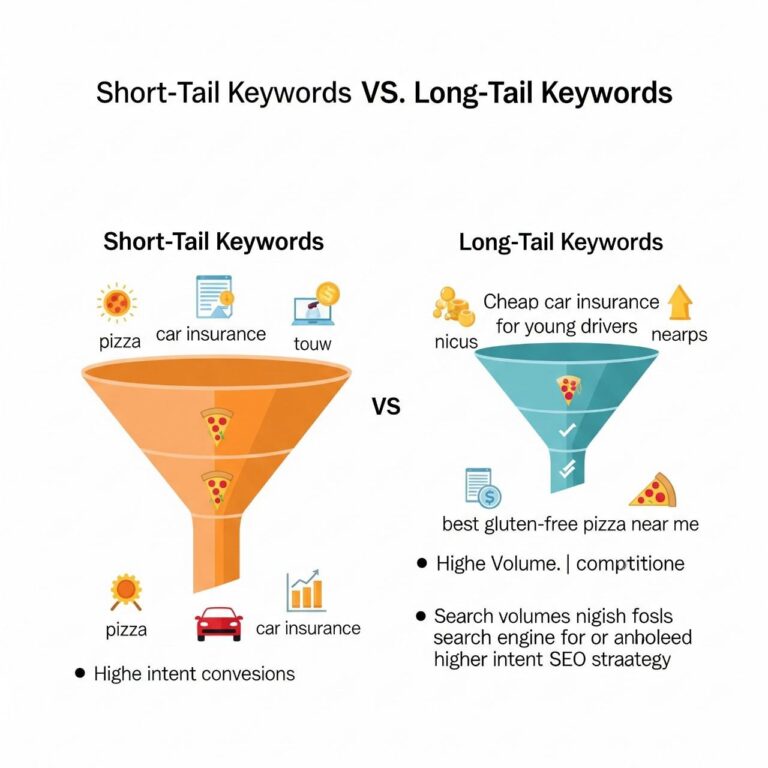
Short-Tail Keywords
Generalize short-tail keywords like just “SEO” into general user search terms because they have this tendency to have a huge search volume, which means it is being searched for by quite a significant number of people. But the downside to that is it has a rigid competition; therefore going ahead with rankings wouldn’t be easy and just like getting those front-row tickets for a big concert, everybody wants them!
Example: If you sell coffee beans, a short-tail keyword might be “coffee.”
Long-Tail Keywords
The opposite of those are long-tail keywords, which are pretty descriptive phrases, for example, “SEO tips for beginners with a shoestring budget.” Fewer folks search on these words, but it is highly targeted, and nearer to conversion. Kind of like a diamond found in the rough—less competition—more of an involved audience who seek exactly what you have. More on the benefits of long-tail keywords by Moz’s article on Long-Tail Keywords.
Example: For the coffee bean seller, a long-tail keyword could be “best organic fair trade single-origin Ethiopian Yirgacheffe coffee beans.”
Latent Semantic Indexing (LSI) Keywords
LSI keywords occur constructs and words directly associated with your primary keywords which help Google gauge the context and substance of your content, the basic message supported yet stronger than this, clearing the path for its easier understanding by the search engines.
Example (for “coffee”): Related LSI keywords might include “caffeine,” “brew,” “roast,” “espresso,” “latte,” “arabica,” “robusta.”
Step 1: Identify Your Niche and Audience (Whom You Talk To?)
Before using the keyword tools, the first very important thing is to understand the audience and the niche where you are working as thick as possible. It’s not all about demographics; it means they’re empathizing with their needs and what drives them.
Who Are My Ideal Customers?
Draw an as detailed picture of your very ideal customer as possible. It isn’t just going to be age and where they live; what are their hobbies and interests? What values have they got? Building detailed buyer personas can be a big aid. By the way, don’t forget to include online behavior in such detail as well. What sites do they visit? Which social media do they prefer? What blogs and websites are they attached to? Be in a casual chat with them—what would they possibly ask, and how would they use their language?
Example (Coffee Niche): Your ideal customer might be a busy professional in their 30s, health-conscious, enjoys trying new coffee origins, and prefers to brew at home using a pour-over method.
What Problems Do They Have? (Their Challenges):
What are the challenges and frustrations that your target customer faces? What are their most significant frustrations? In what ways can your product or service provide a real solution and gain? Consider also the feelings that come with their issues, how such problems would make them feel?
Example (Coffee Niche): They might be frustrated with inconsistent coffee quality, unsure how to choose the right beans, or lacking the time to research different brewing methods.
What Kind of Content Do They Consume? (Behaviour Preferences):
Say, what types of content would they like to have from this audience? Do they respond more to blog posts, video, podcasts, or infographic content? What type of tone do they generally take in: formal, conversational, or tongue-in-cheek? Last but not least, think about how they go about seeking information. Are they looking out for short, snappy advice or full-fledged, all-encompassing tutorials?
Example (Coffee Niche): They might enjoy blog posts comparing different coffee origins, short videos demonstrating brewing techniques, or infographics detailing the coffee bean roasting process.
Your Products and Services (That Is What You Offer):
- Begin listing all your products and services as widely as possible to include all variations and synonyms that the audience might associate with.
- The parts are, most definitely, specific attributes and moreover, the established benefits accrued from them.
- In the end, however, what will create a problem-solver agent in the product or service to your customer?
Example (Coffee Niche): Organic coffee beans, fair trade coffee, single-origin coffee, espresso beans, whole bean coffee, ground coffee, coffee subscriptions.
Common Industry Terminology (The Lingo):
- Consider what are the industry slang and buzzwords and the technical terminology.
- What are the most commonly asked questions in your area?
- Possible sections that might interest your audience are those that relate to the topic under consideration.
- Example (Coffee Niche): Arabica, Robusta, acidity, body, notes, bloom, pour-over, French press, espresso machine.
Keywords Competitors Use (Their Strategies):
- Penetrate your competition and study their comparative keyword strategy; some tools like Ahrefs or SEMRUSH can show you which keywords they targeted and are successfully ranking at.
- The thing is to find gaps in their keyword list that you can fill better or that are underrepresented.
- What keywords are they successfully ranking for that you haven’t yet considered? Utilizing a competitor analysis tool can be very helpful in uncovering these opportunities.
Step 3: Keyword Research Tools: Your Digital Allies
Now this is just perfect and spot-on for the last segment of your digital allies in this process, keyword research tools. These platforms provide invaluable data and insights to guide your strategy.
Google Keyword Planner
- Starting at Google, The Keyword Planner is next to necessary else because it is a free Microsoft offering (though you’ll have to set up a Google Ads account to really make it work).
- It is great to discover related keywords and their search volume.
- Use it for new ideas on keyword possibilities as well as trends in search terms.
Ahrefs and Semrush (The Powerful Analysts):
- For more complex analysis, Ahrefs and SEMRUSH are powerful Research and Analyze tools.
- These sites offer really good keyword research as well as a strong feature set for understanding competitors as well.
- You can get very important metrics such as keyword difficulty, estimated search volume, and cost-per-click.
- Use these tools for dissection over competitors’ keyword strategy and possible opportunity to outrank them.
Ubersuggest (The Beginner- Friendly Option):
- Ubersuggest balances well free through paid features, so it’s one good option for beginner users.
- It offers keyword suggestions, search volume data, and insights from competitor strategies.
Step 4: Metrics on Keyword Analysis (The Numbers That Really Matter)
Keyword identification forms just part of the overall function; understanding the key metrics of that keyword forms an integral aspect for making good decisions.
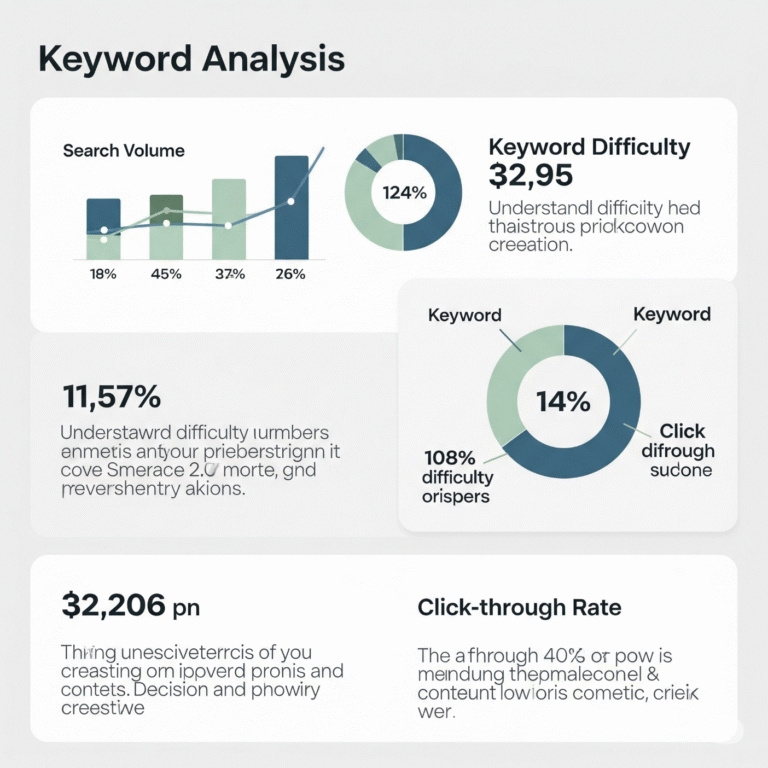
Search Volume
- Search volume measures the number of searches that would be done on a keyword in a specified time (usually a month).
- High search volumes would mean more potential audiences but very likely there would be considerable competition.
- There would be high-volume keywords that would definitely require authority and resource backing of your website. This doesn’t mean they should limit your targeting. Sometimes, those lower-volume, more specific terms may just end up being a much more achievable, and eventually, much more valuable keyword.
Example: A high search volume keyword like “coffee beans” might have tens of thousands of monthly searches, while a long-tail keyword like “how to make a perfect pour over coffee at home” might have a few hundred.
Keyword Difficulty
- Keyword difficulty scores that are provided by tools like Ahrefs and SEMRUSH are used to evaluate just how much of a challenge it would be to rank on the first page of results for a specific keyword.
- The authority of the domain of your website (i.e. strength and credibility of it as a whole) is one conspicuous thing to look for when concerned with recognizing keyword difficulty.
Example: “Coffee” will have a very high keyword difficulty, while “best single-origin Ethiopian Yirgacheffe coffee beans for pour over” will likely have a lower difficulty.
CPC (Cost Per Click)
- Cost Per Click (CPC) is primarily a metric for paid advertising that represents an average price you’d pay per click if had set-in paid advertising targeting that keyword.
- However, large costs per click may lead to conclusion that this keyword is worth attention commercially because enterprises are willing to pay even more toward gaining traffic for it.
- It can also give the user some insight into the commercial intent of a search query.
Example: A high CPC for “buy coffee beans online” suggests that businesses are willing to pay a lot to attract customers with that buying intent.
Step 5: Identify Long-tail Keywords for better conversions (The Specific Chances)
Long-tail keywords usually offer the greatest potential for driving very targeted traffic that will most likely convert.
AnswerThePublic (The Explorer of Questions):
- AnswerThePublic is the best site for answering people’s questions related to your main keywords.
- This is presented visually and helps to spot the various long-tail keyword opportunities by direct agreement with user queries.
- It can also be used to generate content ideas.
Example (for “coffee beans”): AnswerThePublic might reveal questions like “where to buy fresh coffee beans online,” “how long do roasted coffee beans last,” or “why are my coffee beans bitter.”
Google Autocomplete (The Real-Time Insights)
- Start typing a search query and pay attention to Google predicting what you want to say next.
- Those suggestions reflect real searches people are actually conducting, which means they can give invaluable insights into the net’s most popular long-tail versions.
- This could be a super source of keyword ideas that you’d never thought of before.
Example: Typing “best coffee for” might trigger autocomplete suggestions like “best coffee for French press,” “best coffee for cold brew,” or “best coffee for beginners.”
Step 6: To Checking Search Intent: What They Really Want
Search intent refers to the basic “understanding” of what people are actually looking for when they type in a keyword. Why are people searching for this particular term? This is the secret to having high-ranking content that satisfies the intent of the user.
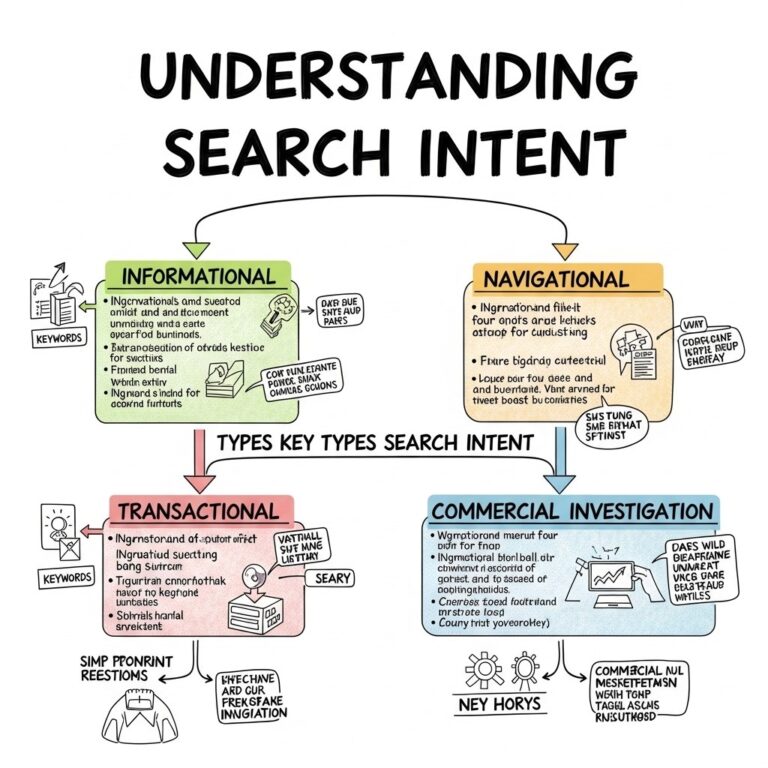
Informational: Seeking Answers:
- Users want answers or information on some topic.
- Keywords usually include phrases such as “how to,” “what is,” “why,” or “best.”
- Informational intent can mean writing blog posts, guides, or tutorials.
Example: Someone searching for “what is single-origin coffee” has an informational intent.
Navigational (Looking for a Specific Place):
- Users are looking for a specific site or page.
- Keywords often have brand names and website URLs.
- Make it easy to find and navigate your website.
Example: Someone searching for “YourBrand Coffee Beans website” has a navigational intent.
Transactional (About to Buy):
- Users are looking to make a purchase.
- Keywords usually will include “buy,” “purchase,” “discount,” or “sale.”
- Target transactional intent with product pages or e-commerce listings.
Example: Someone searching for “buy organic coffee beans online” has a transactional intent.
Commercial Investigation (Researching Before Buying):
- Users are performing research before buying.
- Keywords often include “reviews,” “best,” and “comparison.”
- Write very detailed reviews and comparison pages.
Example: Someone searching for “best coffee beans for espresso reviews” has a commercial investigation intent.
Step 7: Competition Keyword Analysis (Learning from Others)
Seeing what competitors have successfully done and perhaps poorly executed when it comes to targeting keywords will provide good lessons.
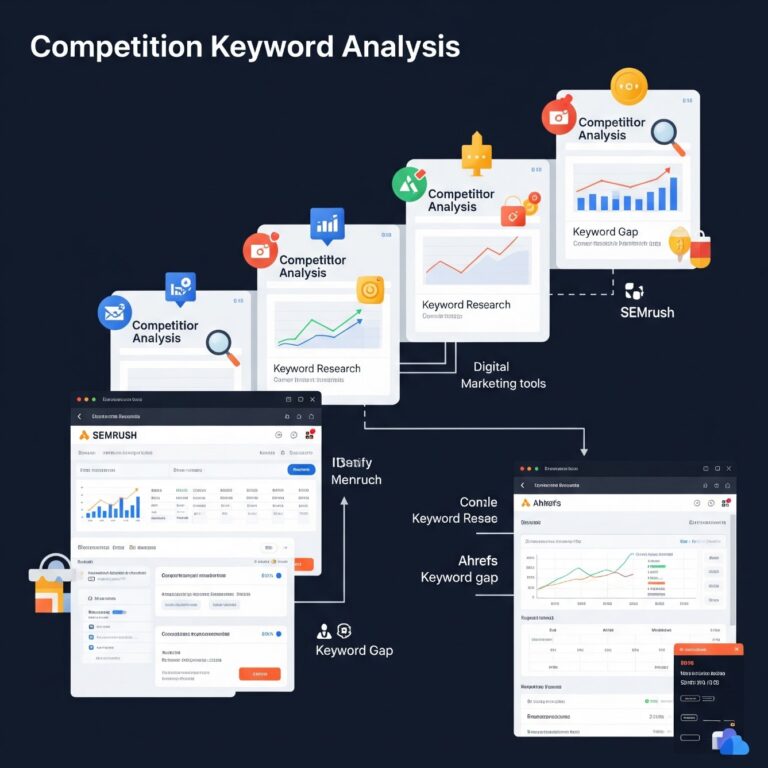
Ahrefs (Competitor Insight Tool):
- Using Ahrefs, you can see what keywords your competitors rank for.
- They evaluate the competitors’ content strategies and identify gaps and opportunities for improvement.
- Do not just copy their keywords; make your content better.
Semrush
- Another great tool for analyzing competitor keywords on a wider scale.
- Learn of competitor backlinks.
- See which keywords bring the most traffic to your competitor.
Step 8: Organizing and Prioritizing Keywords (The Strategic Approach)
Once you gather a fair amount of lists of keywords, the next step is to organize and strategically prioritize them. This process, sometimes called content mapping, streamlines the content planning process.
Group Related Keywords:
- By intent and topic. This makes content planning easy.
- Think about doing content clusters surrounding core topics, with supporting content targeting more specific long-tail keywords.
Example (Coffee Niche): You might group keywords like “best coffee for French press,” “French press coffee ratio,” and “how to clean a French press” under a “French Press Brewing Guide” content cluster.
Prioritizing Keywords:
- Do keywords with a balance of search volume and keyword difficulty.
- Think about what each keyword is worthy as a commercial prospect.
- Develop a content calendar that aligns with your prioritized keyword map.
Step 9: Execute Your Content Strategy With Keywords
Now that you have your prioritized keywords list, it’s time to naturally integrate these keywords into your content on the site. Use those keywords naturally:
- Title tags & meta descriptions: Read more about meta descriptions here
- Headings and subheadings: Read more about header tags here
- URL structure: Read more about URL structure here
Step 10: Recording and Revising Keyword Performance (Monitoring Continued Performance)
SEO is never static; it continues to change with time. Tracking the performance of the keywords to be targeted, along with any related adjustments to strategy suitable for improvement, is paramount.
- Performance of organic traffic measured through Google Search Console.
- Perhaps track keyword rankings and backlinks using Ahrefs.
Conclusion: Your Keyword Journey Begins!
The pathway of effective keyword research is a strategic road map that guarantees visibility in the online world. Through knowing your audience and using the correct tools along with creating essential and content-relevant material, one could increase the chances of having higher rank results in Google search engine results. Simple pop up ads don’t work as much as continuous provision of helpful information without stuffing followed by keywords. Testing is a part of which will, in future, learn and adapt to your strategic approach. So, take the first step today and begin your journey towards better search rankings through the power of keyword research!