
On-Page SEO: Optimize for Visibility & Organic Growth
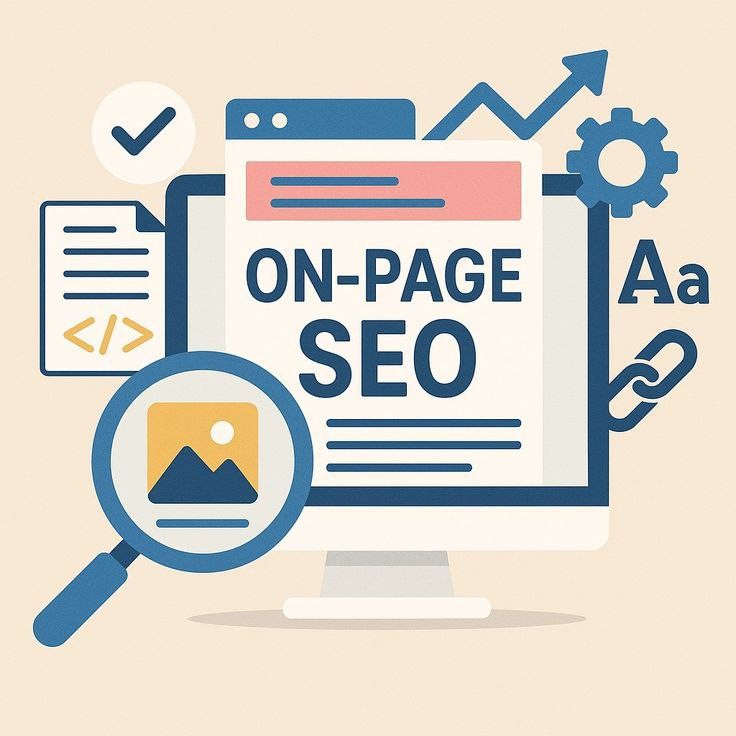
Some websites just pop up right there at the top of Google, while others seem to disappear into thin air? Not magic, but smart “On-Page SEO.”
Think of your site as a high street shop. On-Page SEO is getting your front door sparkling, your signage legible, and the interior obligingly arranged and easy to get around. Done well, it tells search engines exactly what your site is about, but more importantly, it makes it a joy for real people to look around.
Ultimately, it’s about crafting content that folks truly love and search engines can easily grasp. If you’re hoping to grab more attention, snag more clicks, and truly grow your business on its own steam, you’ve landed in just the right place. We’re about to dive deep into how to make your site totally shine in search results, bringing in those perfect clients who are searching for exactly what you’ve got. And the good news? We can do it all for your company.
Why this is important to you?
If your site’s not appearing, you’re losing potential buyers. This guide will give you the step-by-step instructions on what’s required to make it happen, and trust us, we’re pros at getting it done!
High-Quality Content: The Real Deal for Your Readers
At its core, killer On-Page SEO starts with fantastic content. Forget the lazy methods of keyword stuffing willy-nilly everywhere. Google and the other engines are smart enough now to figure out if you’re actually helping people or not. What they’d love to see is content that actually provides answers and solves issues for your readers.
- What are individuals looking for? Put yourself in the shoes of your target consumer prior to writing a word. What are individuals typing into Google? Are they looking for information, purchasing intent, or merely Browse? Their “search intent” matters. Utilize Google Keyword Planner (you can find it within your Google Ads account) and AnswerThePublic (go to answerthepublic.com for interesting facts) to discover what people are asking.
- Be the expert: Don’t say what everyone else is saying. Say your own opinion, your own success stories, and back up your claims with real facts. Show your readers why they come to you and not anyone else for their SEO requirements.
- Go deep, not just wide. Seriously, really detailed articles tend to do way better. Why? Because they offer so much more value! Don’t shy away from truly digging in and covering a topic from every angle. And here’s a big one: people absolutely love content they can actually use.
- Spice it up with multimedia: Nobody wants to read through massive walls of text! Add pictures, videos, pretty infographics, or even audio. It makes your content both engaging and less eye-straining. (You could add an infographic about the phases of content creation here, for example.)
- Freshen it up: The web is a speedy place! Keep updating your content so that it stays fresh. Outdated content can actually hurt your rankings.
2. Making Your Content Easy to Read
- Even with gold content, no one will stick with it if it’s a pain to read. Getting your words laid out just right is very important to keep people reading and making search engines happy.
- Headings (H1-H6): The outline of your content. Headings are like book chapters.
- H1: Your title, your overall one for the whole page.
- H2: These are for overall sections – like the main points we’re discussing here.
- H3-H6: These break up your H2s into smaller, detailed points.
- Here’s a pro tip: Weave your keywords naturally into your headings, but always make sure they sound like something a real person would say and they make sense!
- Short paragraphs are your absolute best pals. Big, bulky chunks of text are super intimidating. Break things up with short, punchy paragraphs, aiming for maybe 3-4 sentences tops.
- Lists are awesome: Bullet points and numbers are terrific at breaking up information, like steps or key takeaways. They’re easy to scan.
- Make use of white space: Don’t fill it all in! Give your text and pictures a little room to breathe. Your whitespace between your content makes your content so much friendlier.
- Choose readable fonts: Opt for clear, readable fonts. Avoid anything that’s too fancy or hurtful to look at.
- Tables and charts? Yes, please! If you have data, make it look nice using tables or charts.
- Call-to-Actions (CTAs): Guide your readers: What do you want people to do after they’ve read your excellent content? Place clear calls-to-action in tactical positions. Maybe it’s “Get a Free SEO Audit” or “Contact Us for a Custom Plan.” (Tip: To learn more about effective CTAs, check out this guide on HubSpot.)
Writing Titles & Descriptions That Drive Clicks
Your title and meta description are your website’s Google billboard. Everybody sees them first, so they have to be irresistible!
- Title Tags: Your headline show.
- Keep ’em nice and concise – try to stay under 60 characters so Google doesn’t chop them off in search results.
- Pop your best keyword right up front and center, but whatever you do, make sure it doesn’t sound stiff or forced.
- Write titles that actually say what’s on the page. No clickbait!
- Use “power words” which stop people in their tracks and conjure up emotion.
- And please, no “keyword stuffing” – that is an automatic penalty assurance.
- Meta Descriptions: Your brief sales pitch.
- Write effective summaries, around 160 characters.
- Of course, include your main keyword.
- Give a decent preview of what’s to come.
- Add a soft call to action to spur that click.
- Have each page with a unique and relevant meta description.
- Test and tweak, my friend! This isn’t a ‘set it and forget it’ kind of deal. You’ll want to keep a close eye on your click-through rates (CTR) in Google Search Console. If a title or description isn’t quite doing its job, don’t be afraid to try a different one!
Savvy Keyword Use: Useful, Not Repetitive
Keywords are less crucial now, but how you’re using them has changed. It’s about being smart and natural, not trying to trick anyone.
- Your main keyword: Put your main keyword in your title tag, meta description, H1 heading, and within the first paragraph of content. This tells search engines what your page is about, right from the start.
- Secondary keywords: Weave secondary keywords and phrases throughout your content. This tells Google about the broader context of your subject.
- Speak like human: Honestly, just write naturally! Don’t stuff keywords where they don’t belong. Sounds computerized and people tune out.
- Semantic SEO: Meaning comprehension. Google no longer looks for matching exact keywords. It wants to understand what your content means. So, use similar concepts and words.
- LSI Keywords: These are “Latent Semantic Indexing” keywords – basically words that are semantically related to your main topic. If your main word is “coffee,” for example, LSI keywords could be “espresso,” “latte,” “beans,” “roast,” etc. There are tools like LSIGraph (lsigraph.com) that can help you find these.
- Context is king: Make sure your keywords fit in very naturally into the content and really add value to the reader.
Internal Linking: Link Your Content Like a Pro
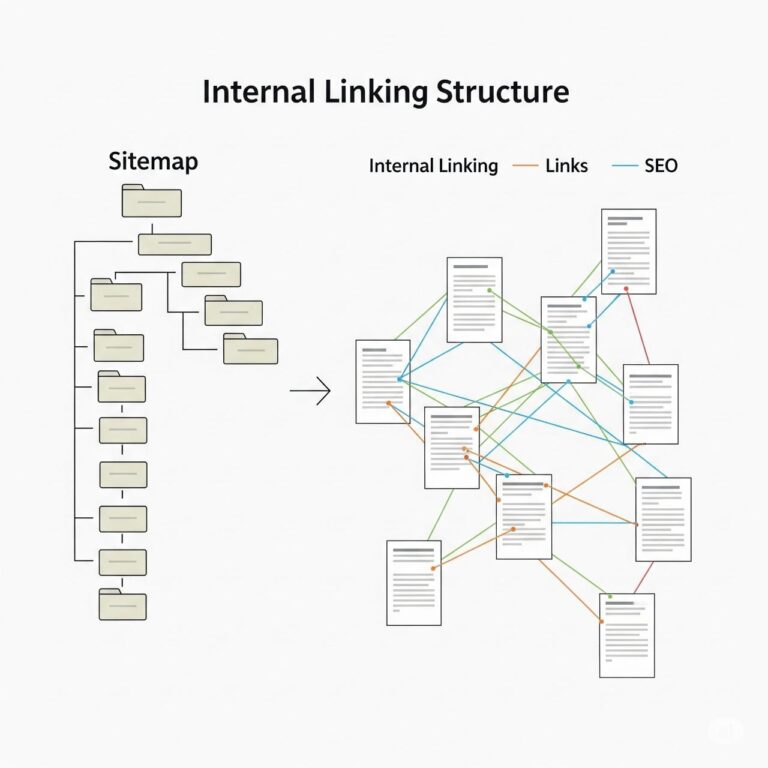
Internal links are links from one web page on your website to another web page on your same site. They’re extremely useful because they help users navigate your site, and also help search engines navigate your site.
Anchor text matters: When you link to another webpage, use descriptive and relevant “anchor text” (the text you click on).
Contextual links: Internal links are best placed in the body of your content, where they are naturally occurring.
Sitemap for search engines: Establish an XML sitemap (you can normally access this through your site’s SEO plugin or CMS) to allow search engines to find and index all your pages with ease.
Clear navigation menu: Ensure that your website’s principal menu is clear to comprehend and use.
Breadcrumbs: Those tiny navigation breadcrumbs you sometimes notice, e.g., “Home > Services > On-Page SEO.” They inform users where they are on your site. (More on internal links from Moz’s guide.)
Share the link juice: Internal links share “link equity” (or “link juice“) across your site. Power from a strong page may pass to other worthwhile pages.
Link to similar content: Always link other pages within your site that offer additional information or background on the topic you are writing on.
Image Optimization: More Than Pretty Pictures
Pictures bring your content alive, but they help with SEO too. Optimize them so that they support your site’s visibility and user experience.
- Descriptive file names: Avoid calling your image “IMG_12345.jpg.” Use descriptive, keyword-laden names like “on-page-seo-checklist.png.”
- Alt text is crucial: Add “alt text” (alternative text) to all images. This describes the image to search engines and to users who cannot view the image (e.g., if it doesn’t load, or for blind users with screen readers). Keep it simple and include keywords if relevant.
- Site speed to site size: Big images slow down your site, and slow sites harm SEO. Make images smaller without losing too much quality. TinyPNG (tinypng.com) is handy for this kind of thing.
- Format correctly for the job: JPEGs are often wonderful for photos, while PNGs are ideal for graphics or logos with transparency. WebP is an up-and-coming format with great compression.
- Image sitemap: If you have a lot of images, it’s worth making a special image sitemap to allow Google to find and index them.
- Responsive images: Make sure your images look good and scale well on all devices – phone, tablet, and desktop.
- Contextual relevance: Place images near relevant text and include captions to include additional information.
Why Longer Content Often Wins: More Value, More Eyes
The “ideal” content length is a hot topic, but longer, more in-depth content typically performs better in search. It’s not a matter of word count, it’s delivering solid value.
- Cover all bases: Longer content lets you go in-depth on a topic, providing a complete picture to your readers.
- Hook ’em: If content is really high-quality and engaging, people stay longer on your site, which tells Google that your site is worth their while.
- Greater link opportunities: Well-written, longer content is more likely to be linked to by other sites, making your site more authoritative.
- More keyword variations: Since there’s more text, you naturally have a greater range of words and phrases related to the keywords, which causes you to rank for more searches.
- Fits search intent: More content is more likely to exactly match what other people are searching for when they’re doing research about a topic in detail.
- Value first, length second: Don’t write more because you can. Write more because you have more value to share!
Conclusion:
And there you have it! On-Page SEO isn’t just another item to check off your list; it’s genuinely about crafting an amazing experience for your visitors while giving search engines all the right signals. It’s truly about building trust, delivering real value, and letting your online presence grow organically over time. Now, putting all these strategies into action can definitely feel like a huge task, especially when you’re busy running your own show. But that’s exactly where we step in. We’re pros at creating content that not only ranks high but also truly connects with your audience, turning those casual visitors into loyal customers.
Ready to seriously boost your visibility and spark some real organic growth?
Let’s chat about how our On-Page SEO writing services can completely change your website’s game.